



Korik Alons
Co-founder
Korik Alons is an expert in strategy formation and execution. He has a
background in applied mathematics and business administration and is a partner at nlmtd.
Korik has 10-15 years of experience as a strategist and consultant in a wide variety of organizations at home and abroad. He is also an experienced program manager with a strong heart for Sustainability and Innovation.

Tijmen van Diepen
Manager
Tijmen is an expert in shaping and executing strategy, particularly in the energy sector. As an experienced management consultant, he brings experience in program management, strategy execution and sustainability. His approach combines both head and heart.

Gijs Bouwmeister
Director
Gijs specializes in guiding organizations in their transformation towards better customer service, new (digital) business models and a different way of working. He has a passion for translating strategy into execution and realizes change with an energetic style.
Share this article
Cover image: Enexis
Getting a handle on a changing energy system
The energy transition is putting unprecedented pressure on the power grid. Where power used to go mainly one way – from power plants to households – we now see countless solar farms, wind turbines and home batteries that also feed back into the grid. The system is becoming more complex and therefore more vulnerable.
To manage this, operational engineering (OT) is becoming increasingly important. Where IT revolves around computer systems and software, OT focuses on the hardware and systems that control the physical processes. Think measurement and control systems, safeguards and automation technology that ensure electricity can be transported safely and reliably. OT is also called the “nervous system” of the energy grid: without these systems, the grid would be unmanageable. We speak to Henri Lemmens, Director of Expertise Business Operations & Stations (EBS) at Enexis, about the role of OT and the process with nlmtd. EBS is the department responsible for the operation, engineering, construction and management of high- and medium-voltage substations – crucial links in the electricity grid. Lemmens on the role of OT: “Without OT, it’s like managing the grid blind. Thanks to OT, we know exactly what is happening in the grid and can make adjustments where necessary.”
A department that had grown considerably in recent years due to a need for more data and information, thanks in part to a constant and growing threat of cyber attacks. But much knowledge was scattered throughout the organization and teams were working alongside each other. As a result, there was an urgent need for a more centralized and future-proof approach.
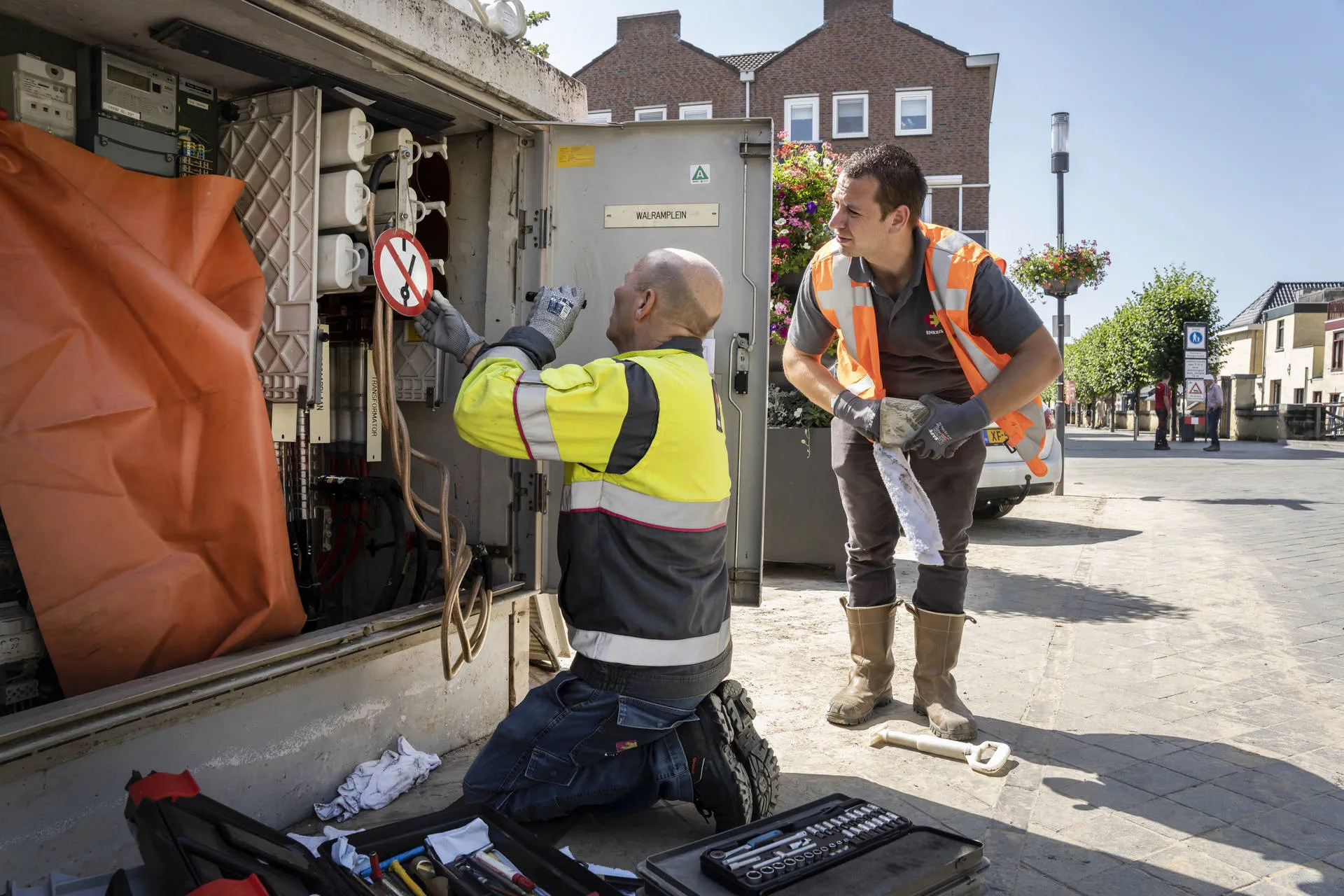
Electricity grid expansion. Image: Enexis / photography Maaike Poelen
The question to nlmtd
Enexis asked nlmtd to help centralize and professionalize OT within the organization. The goal: a clear structure, better cooperation and an organization ready for energy transition. The nlmtd team of Korik Alons, Gijs Bouwmeister and Tijmen van Diepen set to work. Tijmen, strategy and management consultant at nlmtd, explains: “The question was actually simple: how do we ensure that OT knowledge is no longer hidden away everywhere and nowhere in the organization, but is given a clear place? And how does OT get the place it deserves in the organization to effectively improve the control and exploitation of the energy grid?”
From idea to organizational design
Together with Enexis, nlmtd supervised an intensive process of workshops and interventions. These included directors, managers and experts from the EBS (Engineering Operations Stations), Asset Management and IT departments.
The approach then consisted of three parts:
- Visioning – What does OT mean for the future of Enexis and how should the organization be set up accordingly?
- Organizational design – What does a central OT organization look like? What roles, responsibilities and teams are needed?
- Engagement and communication – Through webinars and expert sessions, employees were included in the process to build support for the changes.
An important turning point in this was the involvement of IT. Traditionally, IT and OT were somewhat further apart, but cooperation proved crucial. At the same time, the question of how Enexis can better manage the future energy grid and thereby facilitate energy transition also had to be answered. The Board of Directors saw this and prioritized the project. This created not only clarity about the direction, but also the energy to take quick steps. Lemmens: “Within a few months we knew exactly how we wanted to organize OT. Normally something like that takes years, but this time all the crucial ingredients were there: the urgency was high, ideas were on the table ánd someone threw the first stone into the water. That gave energy and speed.”
A new OT department and acceleration in the energy transition
To better manage the future energy grid, Enexis is moving to Digital System Management. The move resulted in two major decisions:
- Split the current EBS department into two new departments:
- A production department, which focuses on building and managing the high and medium voltage substations.
- A directional/business department, which focuses on governing and utilizing the power grid.
- Creation of a separate OT organization within the direction/business department, combining all OT activities. This new organization will be responsible for the digital control and security of the grid.
The main results of this track:
- Clear structure: no more fragmented teams, but one central OT organization with a clear vision for the future.
- Involved employees: because they thought along from the beginning, ownership and support was created.
- Fast decision-making: where processes can normally be cumbersome, now there was a supported plan within a few months.
- Future-proof design: the new layout allows for smarter utilization of the grid and a better response to the demands of energy transition. Even 10 years from now.
The role of nlmtd
According to Henri, the role of nlmtd was crucial: “nlmtd was the driving force. They brought structure, content and pace, and made sure we didn’t slacken off. They knew what they were talking about, but could also translate it so that everyone understood it. That combination made the difference.” And the project team also looks back with pride: “It was more than just process guidance. We really contributed substantive ideas, drew inspiration from outside and helped Enexis to make choices together. And all in a positive atmosphere, even though it was in fact a reorganization.”
Impact and follow-up
For Enexis, the project is a stepping stone towards System Operations’ broader ambition: to make maximum use of the existing grid without building unnecessary additional capacity. Enexis will also be involved in this in the coming years. Henri concludes: “What makes me most proud is that we did this together – with support, energy and trust. This is a change that is important not only for Enexis, but also for the entire energy transition in the Netherlands.”
Want to know how we can help your organization in the field of Operational Engineering? Please contact Korik, Tijmen or Gijs, we are happy to think along with you.


